Blog
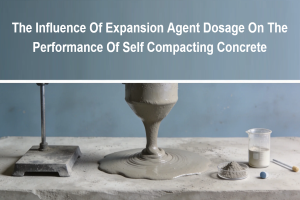
The influence of expansion agent dosage on the performance of self compacting concrete
Blog The influence of exp
Blog
In the field of advanced materials, innovation often stems from the cross-fusion of seemingly unrelated fields. On the one hand, we have polycarboxylate polyether monomers, which are the basic components of the most advanced high-efficiency water-reducing agent and have completely changed the concrete industry. On the other hand, we have piezoelectric materials, which are “smart” materials that can convert mechanical stress into electrical energy, forming the backbone of sensors, actuators, and energy harvesters.
The question ‘What is the impact of polycarboxylate polyether monomers on the piezoelectric properties of materials?’ is fascinating because it links these two fields together. The answer is not simple.
Polycarboxylate polyether monomers (often abbreviated as PCE monomers) come in several different types, such as HPEG 2400, EPEG 3000, and TPEG 2400, which have carboxylate groups (-COO⁻) as the main chain and polyether segments (such as polyethylene glycol, PEG) as side chains. This unique “comb-like” structure is the key to its functionality.
Main function: PCE is used in buildings to significantly improve the workability and flowability of concrete at very low water-cement ratios, resulting in ultra-high-strength and durable concrete.
Piezoelectricity refers to the characteristic of certain crystal materials that generate charges when subjected to mechanical stress. This is called the positive piezoelectric effect. On the contrary, when an electric field is applied to these materials, they undergo deformation, which is called the inverse piezoelectric effect.
Main materials: lead zirconate titanate (PZT), barium titanate (BaTiO), polyvinylidene fluoride (PVDF), quartz.
Main applications: Structural Health Monitoring (SHM) sensors, medical ultrasound sensors, gas lighters, and vibration energy harvesting.
Smart concrete “is made by embedding or dispersing piezoelectric sensors (such as PZT patches or powders) in the concrete matrix. These sensors can monitor the structural health of buildings or bridges by detecting stress changes, cracks, and vibrations.
Here, the PCE high-efficiency water reducing agent in the concrete mixture has several profound indirect effects on the performance of piezoelectric elements:
The efficiency of piezoelectric sensors mainly depends on the degree to which external stress is transmitted from the main structure (concrete) to the sensor itself.
Mechanism: PCE can achieve an extremely low water-cement ratio. This can form a denser, lower porosity, higher strength concrete matrix with fewer internal voids.
The impact on piezoelectric performance: This dense matrix provides excellent mechanical coupling between concrete and embedded piezoelectric sensors. When the structure is subjected to stress, the force can be transmitted more effectively to the sensor, resulting in stronger, more accurate, and more reliable electrical signals. Porous and fragile matrices can suppress stress, resulting in weak signals and high noise.
In some applications, piezoelectric powder (such as PZT powder) is directly mixed into cement to form self-sensing composite materials.
Mechanism: Piezoelectric ceramic particles are similar to cement particles and are prone to agglomeration (clumping) in mixtures. The comb-like structure of PCE molecules adsorbs onto these particles and disperses them uniformly through the steric hindrance effect.
Impact on piezoelectric properties: Agglomeration can damage the intrinsic piezoelectric properties of composite materials. By ensuring uniform dispersion, PCE helps create more homogeneous composite materials, thereby achieving more predictable and optimized sensing performance. It can prevent the formation of “dead zones” where sensors gather and “blind spots” where there are no sensors.
ITZ is the microscopic area between the surface of the aggregate or sensor and the cement slurry. It is usually the weakest link in concrete.
Mechanism: The water-reducing effect of PCE can minimize the “water seepage” (water rising to the surface) around embedded objects to the greatest extent possible. This can form a denser and more robust interface isolation zone (ITZ).
The impact on piezoelectric performance: The strong bond between the sensor and the concrete interface is crucial for stress transmission. The robust interface zone (ITZ) facilitated by PCE ensures the integration of the sensor with the substrate, preventing interface slip and signal loss, especially under dynamic or vibration loads.
The concrete matrix itself is a dielectric material, and the electrical signal generated by piezoelectric sensors must pass through the matrix in order to be measured.
Mechanism: PCE can subtly affect the chemical properties of cement pore solutions and the types of hydration products formed.
Influence on piezoelectric performance: Changes in the chemical composition of the matrix will slightly alter its overall dielectric constant and conductivity. Although this is only a minor impact, it can affect the electrical impedance of the system, so it may be necessary to consider this when calibrating the sensing system.
Polycarboxylate polyether monomer is a multifunctional additive that affects the properties of piezoelectric materials through various mechanisms: improving filler dispersion, adjusting dielectric constant, enhancing mechanical flexibility, and stabilizing charge transfer. Although their effectiveness is influenced by factors such as molecular weight and concentration, after optimization, the performance of piezoelectric composite materials in flexible electronics, energy harvesting, industrial sensing, and other fields can be significantly improved.
In the future, by optimizing the molecular structure of polycarboxylate polyether monomers and targeting specific piezoelectric properties, their application scope will be further expanded.
The influence of expansion agent dosage on the performance of self compacting concrete
Blog The influence of exp
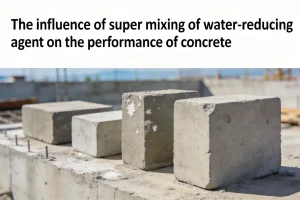
The influence of super mixing of water-reducing agent on the performance of concrete
Blog The influence of sup