Blog
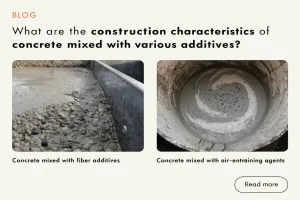
What are the construction characteristics of concrete mixed with various additives?
Blog What are the constru
Blog
Nuclear power plants have extremely high material requirements, requiring high durability, radiation resistance, and structural stability. Concrete, as the foundation material for such facilities, must withstand decades of operating pressure, including radiation exposure, thermal cycling, and chemical corrosion.
A key question arises: Can concrete formulated with polycarboxylate superplasticizer (PCE), a commonly used component in modern high-performance concrete, meet these stringent requirements?
Concrete used in nuclear power plants (such as containment structures, reactor foundations, and radiation shielding layers) must comply with strict specifications, including:
Excellent durability: The design service life of nuclear power plants is 60-80 years, with some even reaching 100 years. Concrete must resist environmental factors, chemical erosion, and radiation erosion throughout its entire service life.
Low permeability: prevents leakage of radioactive substances;
Radiation stability: minimal performance degradation under long-term gamma and neutron radiation;
Mechanical strength: high compressive and tensile strength to withstand operating pressure and seismic loads;
Volume stability: resistant to shrinkage, creep, and thermal expansion, avoiding cracking.
These requirements far exceed conventional building standards, so material selection is crucial.
Polycarboxylate-based high-efficiency water-reducing agents are known for improving concrete workability, reducing water consumption, and optimizing the concrete microstructure. These characteristics are highly compatible with multiple core requirements of nuclear-grade concrete:
PCE is currently the most effective water-reducing agent, significantly reducing concrete water consumption while maintaining excellent construction performance.
The impact on concrete in nuclear power plants:
Higher strength: Cement slurry has a higher density, and concrete is more stable.
Reduced permeability: The reduction in the number of connected pores significantly enhances sealing performance and resistance to corrosive substances.
Enhanced durability: Improved resistance to freeze-thaw cycles, sulphate erosion, and chloride erosion.
PCE has a high slump retention rate and can extend construction time without requiring additional water. They can be used to produce self-compacting concrete (SCC).
The impact on concrete in nuclear power plants:
Improved pouring: It is easier to pour concrete around complex steel structures and embedded components, thereby reducing the risk of voids and honeycombing.
Uniformity: The better the dispersion of cement particles and aggregates, the more uniform and defect-free the concrete matrix will be.
Reduce labour: reduce vibration requirements, improve on-site efficiency, and enhance safety.
Nuclear power plants undergo thermal cycling (e.g., reactor start-up and shutdown) and exposure to corrosive chemicals (e.g., boric acid used in cooling systems). PCE-modified concrete exhibits excellent performance under these conditions due to:
A dense microstructure can resist thermal spalling (cracking caused by sudden temperature changes);
Low porosity limits chemical penetration and protects the substrate from degradation by coolants or corrosive ions.
Nuclear power plant concrete is often mixed with heavy aggregates (such as barite and magnetite) to enhance its radiation shielding ability. The dispersing effect of PCE ensures that these high-density particles are uniformly mixed, avoiding weak points or uneven shielding caused by segregation.
In addition, PCE itself has good chemical stability in radiation environments. The study on PCE-modified concrete exposed to 100 kGy of gamma radiation, equivalent to decades of radiation dose in nuclear power plants, showed that the polymer did not undergo significant decomposition, and the concrete’s performance did not degrade.
Although polycarboxylate superplasticizer has many advantages, there are special considerations when using PCE in nuclear concrete:
Concerns: PCE is an organic polymer. Long-term exposure to high-dose radiation may degrade it, alter its properties, or produce adverse by-products.
Mitigation measures: The research focuses on developing radiation-resistant PCE formulations. Research typically involves exposing PCE-modified concrete samples to simulated radiation environments and evaluating their performance under these conditions. The organic content in the concrete mixture is extremely low.
Concerns: Impurities in PCE formulations, such as chlorides, sodium, potassium, and sulphur, may be activated under neutron flux or cause corrosion of steel bars.
Mitigation measures: Nuclear power plant regulations require that the content of these elements in all concrete components (including admixtures) must be extremely low. Manufacturers of polyvinyl chloride (PVC) used for nuclear power must ensure that their products have extremely high purity.
Concrete mixed with a polycarboxylate superplasticizer is not only suitable for nuclear power plants but also offers significant advantages. Its ability to reduce permeability, enhance strength, improve durability, and provide radiation shielding all meet the strict requirements of nuclear-grade concrete.
However, their application requires careful selection of materials, strict quality control, and adherence to the highest regulatory standards, with particular attention to radiation stability and chemical purity. With the advancement of nuclear technology, additives that support the integrity and service life of its critical infrastructure will also develop accordingly.
What are the construction characteristics of concrete mixed with various additives?
Blog What are the constru
Product information, specifications & applications — sent directly to your email.
*Your information is kept confidential and will only be used to contact you regarding our products.