

Blog
Study on the Effects of Water Reducing Agents and Expanding Agents on Concrete Shrinkage
Blog Study on the Effects
Blog
The porosity of concrete directly affects its strength, durability, and permeability. A concrete accelerator is widely used to shorten setting time and improve early strength, and its effect on porosity is dual: an appropriate amount can reduce total porosity and improve pore structure; excessive or improper use can increase porosity and enlarge pore size.
This article provides an in-depth analysis of the relationship between concrete accelerators and porosity, explaining their mechanisms, consequences, and optimal mitigation measures.
Concrete accelerators are additives added to concrete mixtures to accelerate the chemical reaction (hydration reaction) between cement and water. Its main functions are:
This makes them indispensable in the following applications:
Porosity refers to the total volume of voids or pores within the hardened concrete matrix. These pores are mainly filled with air and water.
Porosity is a key factor determining the quality of concrete, as it directly affects:
Concrete accelerators (such as calcium formate, triethanolamine, and chloride accelerators) change the porosity of concrete by adjusting the hydration kinetics of cement and the formation of hydration products:
Mechanism: Accelerators promote the hydration reactions of tricalcium silicate (C3S) and tricalcium aluminate (C3A), thereby accelerating the formation of dense hydration products (CSH gel, ettringite). These products fill the capillary pores, reduce the total porosity, and minimize macropores to the greatest extent possible.
When no accelerator is used, the porosity of concrete at 28 days is 18-22%, with large pores (>50nm) accounting for 40-50% of the total pores.
Using the optimal amount of accelerator: After 28 days, the porosity decreases to 14-19%, and the high porosity decreases to 25-35%, thereby improving the density and impermeability of concrete.
Excessive addition (>3% of cement mass): Excessive addition can lead to uneven hydration – local rapid reactions result in incomplete hydration of cement, leaving unreacted particles and forming connected pores. Compared with the optimal addition amount group, the porosity may increase by 10% to 15%.
Chloride-based accelerator (misuse): High chloride content can lead to salt crystallization, creating additional microcracks and pores and reducing long-term durability.
Accelerators can reduce the activation energy of cement hydration and shorten the induction period. At an early stage, more hydration products (CSH gel) will be generated to fill the pores formed by water evaporation and those of unreacted cement.
For example, calcium formate (1% dosage) can accelerate C3S hydration by 30-40%, increase early CSH gel content, and reduce capillary porosity by 15-20%.
Accelerators can change the morphology of hydration products: ettringite crystals become smaller and more uniform, while CSH gel forms a more dense network. This reduces the gap size between particles and improves pore connectivity.
Comparison: Without a promoter, the calcium aluminate crystals become rough and dispersed, resulting in large gaps between the hydration products.
Rapid solidification can reduce surface moisture loss and internal leakage, thereby minimizing the formation of capillary pores to the greatest extent possible. However, excessive solidification speed can cause rapid hardening of concrete, hinder full compaction, and lead to the formation of pores.
Although accelerators can increase porosity, their use is often unavoidable. The key is to control its impact through reasonable design and construction methods.
Concrete accelerators affect concrete porosity by altering hydration kinetics and product morphology. Moderate accelerators can reduce total porosity and improve pore structure, whereas excessive or improper use can increase voids and reduce durability.
By understanding this fundamental trade-off, engineers and contractors can leverage the advantages of accelerators while making informed decisions to ensure the long-term integrity and service life of concrete structures.
Study on the Effects of Water Reducing Agents and Expanding Agents on Concrete Shrinkage
Blog Study on the Effects
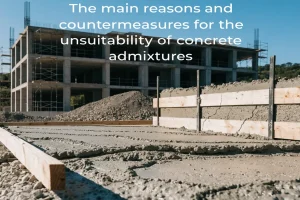
The main reasons and countermeasures for the unsuitability of concrete admixtures
Blog The main reasons and

How to choose antifreeze for a construction site when temperatures drop?
Blog How to choose antifr
Product information, specifications & applications — sent directly to your email.
*Your information is kept confidential and will only be used to contact you regarding our products.