
Blog
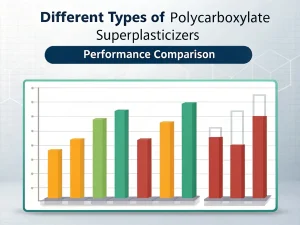
Different Types Of Polycarboxylate Superplasticizers Performance Comparison
Blog Different Types Of P
Blog
In the field of building materials, abrasion resistant concrete has become the core material for addressing structural wear problems in harsh environments, such as high-frequency friction and heavy load compaction, thanks to its high wear resistance, strong durability, and excellent mechanical properties. The application of abrasion resistant concrete significantly extends the service life of facilities. It reduces maintenance costs, whether in factory workshops, on highways at toll stations, or in loading and unloading areas of large logistics warehouses.
This article will take you on a deep exploration of the seven core application scenarios of abrasion resistant concrete, revealing its enormous value in modern engineering.
This is the most classic and widely used field of application for abrasion resistant concrete. Imagine a modern factory or logistics center:
Heavy-duty forklifts and AGVs (Automated Guided Vehicles) shuttle day and night, producing continuous, high-intensity crushing and friction on the ground.
Heavy equipment and shelves: generate significant static loads on the ground.
Accidental drop of parts or tools: causing a momentary strong impact on the ground.
In these scenarios, ordinary concrete floors will quickly deteriorate, affecting production efficiency and posing safety hazards. abrasion resistant concrete (usually diamond sand or metal aggregate wear-resistant flooring) can provide an extremely hard, flat, and impact-resistant surface, ensuring smooth, safe production activities, greatly extending the service life of the ground, and reducing maintenance costs.
Whether it is an underground parking lot or a large transportation hub, the wear and tear of the wheels is the most direct test of the ground.
Vehicle steering and braking: At entrances, ramps, and turns, tires generate significant shear and friction forces on the ground.
High traffic volume: Continuous traffic flow requires the ground to withstand millions of rolling cycles.
Chemical erosion: Oil leakage, antifreeze, and winter snow melting agents can accelerate the aging of the ground.
The application of abrasion resistant concrete, especially the wear-resistant floor combined with a liquid hardening agent, can not only effectively resist wheel wear but also improve surface density, resist the penetration of oil and chemicals, and maintain the cleanliness and durability of the ground.
Shopping centers, supermarkets, exhibition centers, hospitals, and schools with huge foot traffic also have strict ground requirements.
High-frequency trampling: The daily walking of thousands of people is a low-intensity but long-lasting wear and tear on the ground.
Cleaning and maintenance: The ground needs to be easy to clean and resistant to chemical corrosion from cleaning agents.
Aesthetic requirements: As the “face” of public spaces, the ground must also have a certain degree of aesthetic appeal.
The polished concrete floor (i.e., polished concrete) can present a luster and texture similar to marble, while offering ultra-high hardness and wear resistance, without dust or sand, and perfectly combining functionality with modern design aesthetics.
In structures such as spillways, spillway tunnels, and port terminals of water conservancy dams, the enemy faced by concrete is no longer the wheels, but the high-speed water flow and the sand and gravel it carries.
Erosion caused by high-speed water flow: Water flows at speeds of tens or even hundreds of kilometers per hour, generating enormous scouring forces and cavitation damage to concrete surfaces.
Wear and tear from sand and gravel: The sediment and stones carried in the water flow act like sandpaper, constantly polishing the concrete surface.
Freeze-thaw cycles and chemical erosion: In cold regions and marine environments, these factors can exacerbate damage.
In such extreme environments, high-performance, impact-resistant concrete mixed with materials such as silica fume and steel fibers must be used.It has extremely high density and impact resistance, effectively resisting long-term erosion from water flow and ensuring the 100-year safety of hydraulic structures.
The country’s basic transportation network is another key area for the application of abrasion resistant concrete.
Bridge pavement layer: directly bears vehicle loads and is exposed to the harshest natural environments.
Airport runways and aprons: withstand the enormous impact and weight of aircraft during takeoff and landing.
Toll stations and highway intersections: Vehicles frequently start, stop, and turn, resulting in severe wear and tear.
The use of high-performance, abrasion resistant concrete in these areas can significantly reduce rutting, cracking, and damage to the road surface, prolong the road’s maintenance cycle, and ensure traffic safety and smoothness.
In some special industrial environments, concrete not only needs to be wear-resistant but also corrosion-resistant.
Waste and sewage treatment plants are subject to corrosion from various chemical substances, such as acids and alkalis, in household waste and industrial wastewater.
Mining and metallurgical industries: Chutes, silos, and other parts need to resist the intense friction and impact of ores.
Agricultural facilities: The ground at livestock farms must resist the corrosive effects of animal waste.
The special abrasion resistant concrete developed for these scenarios achieves dual protection against wear and chemical erosion by using corrosion-resistant cementitious materials and aggregates.
The emerging field of sports and leisure has also become a testing ground for abrasion resistant concrete.
Skateboard Park: The wheels and surfaces of skateboards have a significant impact on the field and generate high friction.
Outdoor basketball courts and tennis courts require a flat, durable, and elastic surface.
Abrasion resistant concrete can provide a smooth, sturdy, and versatile surface for these venues, withstand high-impact sports, and create a safe, reliable environment for athletes.
The application of abrasion resistant concrete has expanded from traditional industrial fields to livelihood projects and special environments, and has permeated into all aspects of modern social infrastructure. Whether in light commercial floors or heavy industrial plants, the appropriate use of abrasion resistant concrete can significantly improve facility durability and reduce total life-cycle costs.
In the future, as technologies such as nanomaterials and new fibers continue to develop, the performance of abrasion resistant concrete will be further improved, and its application will extend to more extreme environments (such as ultra-high temperatures and strong radiation), making it an indispensable “wear-resistant cornerstone” in engineering construction.
Different Types Of Polycarboxylate Superplasticizers Performance Comparison
Blog Different Types Of P

Super Early Strength Polycarboxylate Superplasticizer For Sleeve Grouting Material
Blog Super Early Strength