Blog
The influence of expansion agent dosage on the performance of self compacting concrete
Blog The influence of exp
Blog
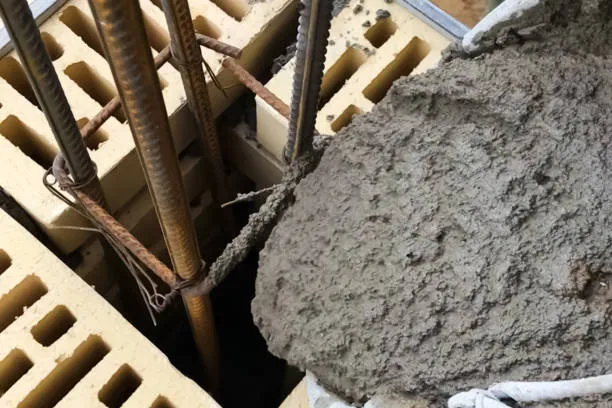
High efficient polycarboxylate superplasticizer and ordinary polycarboxylate superplasticizer differ in four dimensions: molecular configuration, performance, adaptability, and production cost.
Efficient polycarboxylate superplasticizer: with refined molecular configuration and higher regularity, the main chain and side chains are designed with directional formulas, resulting in a high density of side chain arrangement and an optimal chain length ratio. This structure can form a dense, highly stable polymer adsorption layer on the surface of cement particles, with optimal electrostatic repulsion and spatial hindrance.
Ordinary polycarboxylate superplasticizer: The molecular skeleton structure is simple, the side chain length is uneven, the distribution uniformity is poor, the group adsorption ability is limited, the adsorption layer formed on the surface of cement particles is weak, and the particle dispersion and dissociation efficiency are weak.
Water reducing performance
The high efficiency polycarboxylate superplasticizer has excellent water-reduction efficiency, with a standard water-reduction rate of over 30% and a high-end model range of 30%- 40%. It can significantly reduce the water-cement ratio of concrete and enable the production of high-strength concrete. The water-reduction range of ordinary polycarboxylate superplasticizer is 20%- 30%. Under the same concrete workability standard, the reduction rate of mixing water is limited, and the ability to reduce water cement ratio is weak.
Dispersion and collapse retention performance
Efficient polycarboxylate superplasticizer relies on exclusive long side chains and anchoring adsorption groups, with stronger dispersion and dissociation ability of cement particles. It can adsorb and wrap cement particles for extended periods, effectively blocking early hydration reactions. The concrete slump loss is minimal within 2-3 hours, and the slump stability is outstanding. Ordinary polycarboxylate superplasticizer has insufficient dispersibility, short adsorption time, and a rapid decline in concrete slump over time, resulting in poor adaptability to long-term construction.
Efficient polycarboxylate superplasticizer: specially designed for high-performance and harsh working conditions, suitable for the preparation of C60 and above high-strength concrete, high fluidity concrete, and self-compacting concrete. It is commonly used in core load-bearing structural parts of high-rise buildings, large-span bridges, marine hydraulic engineering, key infrastructure and other projects.
Ordinary polycarboxylate superplasticizer: Suitable for conventional civil engineering conditions, meeting the construction requirements of conventional strength and flowability concrete for ordinary load-bearing buildings, municipal road bases, low-rise structures, etc., and suitable for general concrete projects with loose performance standards.
The synthesis process for high-efficiency polycarboxylate superplasticizer is complex, and high-purity, high-performance polyether monomers must be used as raw materials. The polymerization reaction, temperature control, and feeding are finely controlled throughout the process. The cost of raw materials and energy consumption during production is high, and the market price is higher.
The synthesis process of ordinary polycarboxylate superplasticizer is simple, the requirements for raw material grade are low, the precision of reaction condition control is low, the production energy consumption and comprehensive cost are lower, the product cost-effectiveness is high, and the market price is affordable.
Based on the core advantages of ultra-high water reduction rate, long-term slump retention, optimized concrete workability, and improved structural durability, high-efficiency polycarboxylate superplasticizer is widely used in high-performance engineering construction, special concrete preparation, and special working condition construction fields. The application scenarios are as follows:
1. Transportation infrastructure projects
Fully applicable to high-speed railways, passenger dedicated lines, high-grade highways, large bridges, mountain tunnels, urban subways, ports, airports, and other projects, suitable for on-site casting, factory prefabrication, reinforced concrete, and prestressed concrete construction processes of all types.
2. Industrial and civil high-rise buildings
Suitable for the construction of standardized industrial plants, warehouses, and super high-rise commercial and residential buildings. Optimize concrete pumping and workability, reduce construction pumping resistance, improve pouring efficiency, effectively compress the main construction period, and adapt to the requirements of modern building scale and high-efficiency construction.
3. Water conservancy and marine engineering
Suitable for water conservancy and hydropower projects (such as dams, water gates, etc.) and marine engineering. It can significantly improve the impermeability, freeze-thaw resistance, and chloride-ion-erosion resistance of concrete, ensuring the stability and durability of the structure under complex hydrogeological conditions.
1. High-strength and high-performance concrete
Adapting to the vertical long-distance pumping and large-scale continuous pouring conditions of super high-rise buildings, efficiently dissociating cement agglomerated particles, reducing internal friction resistance of the mixture, ensuring stable fluidity throughout the entire process of concrete transportation and long-distance pumping, and eliminating pipe blockage and segregation problems.
2. High fluidity pumped concrete
By endowing concrete with self-leveling, self-filling, and self-compacting characteristics, it can be poured and formed by its own weight without the need for mechanical vibration. It is specifically designed for the construction of irregular structural components with dense steel reinforcement, complex internal cavity structures, and many blind spots in vibration operations.
3. Self-compacting concrete
Used for the large-scale production of prefabricated beams and columns, floor slabs, prefabricated columns, subway shield tunnel segments, and municipal prefabricated components. It can optimize the apparent quality of components, reduce appearance defects such as roughness, bubbles, and missing corners, improve the dimensional accuracy of components, accelerate early-strength development in concrete, shorten the prefabrication and curing cycle, and increase factory production capacity.
4. Industrialized prefabricated components
Suitable for high-temperature construction in summer, long-distance transportation of commercial concrete by tank trucks, and delayed pouring across sections, relying on long-term collapse resistance to stabilize the working performance of concrete; At the same time, it adapts to the new technology of steam free prefabricated components, replacing traditional high-temperature steam curing processes, reducing energy consumption in prefabrication plants, and adapting to green and low-carbon industrial prefabrication construction processes.
Suitable for high-temperature construction in summer, long-distance transportation of commercial concrete by tank trucks, and delayed pouring across sections, relying on long-term collapse resistance to stabilize the working performance of concrete; At the same time, it adapts to the new technology of steam free prefabricated components, replacing traditional high-temperature steam curing processes, reducing energy consumption in prefabrication plants, and adapting to green and low-carbon industrial prefabrication construction processes.
Whether you want to purchase polycarboxylate monomers or polycarboxylate superplasticizer, you can contact us and we will provide you with the most professional service!
The influence of expansion agent dosage on the performance of self compacting concrete
Blog The influence of exp
The influence of super mixing of water-reducing agent on the performance of concrete
Blog The influence of sup