Why is it easier for concrete to crack when the water consumption decreases after adding water reducing agents?
Many construction workers have encountered an unusual problem: after adding water reducing agents, concrete water consumption drops significantly, but shrinkage cracks become more frequent and more severe. This is not a quality issue with the water-reducing agent, nor is it a dosage error. The core issue is that the underlying physical principles run counter to common public intuition.
Logical traps in conventional cognition
The public commonly understands that water reducing agents disperse cement particles and reduce the water used in mixing; the less water there is, the less water evaporates after the concrete hardens, and shrinkage and cracking should be lighter.
The first two steps of this reasoning are correct, but the last step contains a key misunderstanding. Drying shrinkage in concrete is not simply water evaporation and volume shrinkage; the core mechanism is capillary negative-pressure traction.
The interior of concrete is filled with capillary pores, and when water evaporates from these pores, negative pressure forms inside them. This negative pressure pulls the pore walls inward, causing countless capillary pores to shrink and pull at the same time, which macroscopically manifests as overall concrete shrinkage. Therefore, the degree of concrete shrinkage depends not only on the amount of evaporated water, but also on the magnitude of capillary negative pressure.
Two key factors determining the degree of contraction
The negative pressure of capillary contraction is only related to two core conditions:
The first is water surface tension. The lower the surface tension, the lower the negative pressure generated by water evaporation, and the milder the shrinkage, which is also the core principle behind the effective crack resistance of shrinkage-reducing agents.
The second is the pore size of the capillary pores. Physical laws indicate that the negative pressure in capillary pores is inversely proportional to the aperture radius; the smaller the aperture, the greater the contraction force.
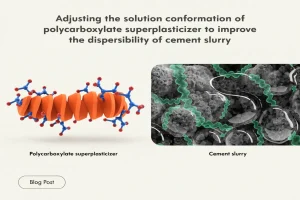
One core function of water-reducing agents is to refine the internal pore structure of concrete, making the overall pore size smaller, the capillary pores finer, and reshaping the internal pore system.
Anti-common sense truth: aperture refinement dominates shrinkage effect
Adding water-reducing agents has two opposite effects: reducing water usage alleviates concrete shrinkage, but significant pore refinement greatly increases shrinkage tension.
After offsetting each other, the shrinkage increase from aperture refinement far outweighs the shrinkage reduction from water conservation, which is why cracking worsens.
Water-reducing agents strongly optimize pore size and can refine micron-sized pores to nanometer-sized ones. When the aperture decreases by an order of magnitude, the negative pressure increases exponentially, reflecting exponential force growth; contraction relief from reduced water consumption is a normal linear change.
Conclusion-Why is it easier for concrete to crack when the water consumption decreases after adding water reducing agents?
Water-reducing agents are a typical double-edged sword: they can optimize concrete workability, improve strength, and enable low water-cement-ratio construction. However, these fine pores can also significantly increase concrete drying shrinkage, leading to cracks.