Blog
Study on the Performance of Concrete with Sucrose Citric Acid Composite Retarder
Blog Study on the Perform
Blog
The principle of synthesizing a polycarboxylate superplasticizer at room temperature is to add a reducing agent dropwise to the reaction vessel, along with an oxidizing agent, to form an oxidation-reduction system. During the process, oxygen free radicals are generated. To achieve a stable structure, oxygen free radicals remove electrons from the monomer, turning it into an active monomer. The active monomer repeatedly and rapidly adds to the monomer molecule, and the large monomer and small monomer are copolymerized to form the superplasticizer molecule.
First, polymerize and then esterify; that is, first prepare polycarboxylates with a known relative molecular weight, and then graft polycarboxylates with polyethers of known relative molecular weight at higher temperatures through an esterification reaction in the presence of a catalyst. However, due to the limited variety and specifications of polycarboxylic acid products, it is difficult to adjust their composition and relative molecular weight. At the same time, due to the poor compatibility between polycarboxylic acids and polyethers, esterification is difficult to carry out in practice. As the esterification reaction proceeds, water continuously overflows, and phase separation occurs.
If a polyether monoalcohol or diol with good compatibility with polycarboxylates can be selected, the phase separation problem can be solved. He Jing et al. synthesized a polycarboxylate water reducer by first polymerizing styrene and maleic anhydride, then sulfonating and esterifying the copolymer. The water reducer has high dispersibility and excellent slump retention performance.
This method involves esterification followed by polymerization. First, a high-molecular-weight monomer with polymerization activity (usually methoxypolyethylene glycol methacrylate) is prepared through an esterification reaction. Then, a certain proportion of monomers are mixed and polymerized directly by solution polymerization to obtain the final product. This synthesis process may seem simple, but the intermediate separation and purification process is cumbersome and costly.
This method combines polymerization and esterification, using polyether as the reaction medium for carboxylic acid unsaturated monomers. The esterification reaction occurs simultaneously with the polymerization of carboxylic acid unsaturated monomers, thus avoiding the problem of poor compatibility between polycarboxylates and polyethers. Shawl et al. gradually added a mixed solution of acrylic acid monomer, chain transfer agent, and initiator dropwise to an aqueous solution of methoxypolyethylene glycol with a relative molecular weight of 2000. After reacting at 60 °C for 45 minutes, the solution was heated to 120 °C and continuously dehydrated under N2 protection (about 50 minutes). Then, a catalyst was added, and the mixture was heated to 165 °C for 1 hour, followed by further grafting to obtain the final product.
Internal factors: redox system and type, polymerization activity of various materials, and residual amount of polymerization inhibitors;
External factors: initial temperature (rate of free-radical decomposition), stirring intensity (oxygen in the air consumes free radicals).
In the ambient-temperature process, some of the four-carbon monomers from different manufacturers are heated up while others are not (under the same process conditions). How can we solve this problem as a synthesis manufacturer?
The phenomenon of no temperature rise in room-temperature polymerization is quite common, and the specific reasons have not been accurately confirmed yet. The influencing factors include the following:
(1) The oxygen-blocking effect in the air. Oxygen in air is a highly effective polymerization inhibitor. As the stirring force increases, more oxygen is mixed into the reaction solution, and the inhibition effect increases. Stirring force depends on stirring speed, stirring blade mode, and blade width.
(2) The chain termination effect of the vessel wall. The effect of chain termination on the probability of no temperature rise is related to the reaction vessel material, with enamel > plastic > stainless steel.
(3) Polymer inhibitors in polyether and acrylic acid. Mainly manifested in seasonal changes or changes in formulation processes by polyether manufacturers, the probability of no temperature rise increases significantly. The closer the acrylic acid production month is, the greater the probability of no temperature rise, especially for imported acids.
(4) Microemulsion effect. Polyether is a large molecule with lipophilic end groups, which can easily form micelles and encapsulate lipophilic molecules (such as Vc), thereby blocking molecular contact and collision, and stopping the reaction. The phenomenon is that the probability of hydrophilic reducing agents not heating up is extremely low.
(5) Water quality factors. In warm, humid areas with high levels of microorganisms in the water, the phenomenon of no temperature rise is much less common or even non-existent, such as Sichuan, Guangxi, Hainan, and other places.
(1) On the device, a thermal resistor with a minimum division value of 0.1 and a meter head is used. In the early stage of low-temperature technology, the temperature rise is slow, requiring very small temperature changes. Install a frequency converter and adjust the mixing motor speed. Change the shape and width of the mixing blade, and adjust the mixing force. Try not to use enamel equipment.
(2) In terms of the system, it is necessary to pay attention to monitoring the heating trend in the first 30 minutes. Experience has shown that if no heating is detected in the first 30 minutes and addressed in a timely manner, it will hardly affect the mother liquor’s performance. It is necessary to prepare for non-heating risk control, such as keeping an appropriate amount of ferrous sulfate solution, reducing agent, and chain transfer agent solution on hand. This production should be prepared, and the next production should be combined for use and re-prepared. Try to use water-soluble reducing agent technology as much as possible.
Once it is found that the temperature does not rise during production, stirring and dropwise addition should be stopped immediately. After 10-15 minutes, if the temperature rises, stirring and dropwise addition should be restarted. If the temperature does not rise, adding a 10% aqueous solution of a reducing agent and a chain transfer agent at the bottom of the kettle will raise the temperature under normal circumstances.
Misjudgment of temperature not rising: The first thing to determine is the difference in temperature between the environment, jacket, and kettle before dropwise addition, such as whether preheating assistance has been carried out, whether the water temperature in the jacket is consistent with the material temperature, and the difference in environmental temperature and groundwater at the location where the polyether is stored. These will all affect the judgment of preheating.
Study on the Performance of Concrete with Sucrose Citric Acid Composite Retarder
Blog Study on the Perform
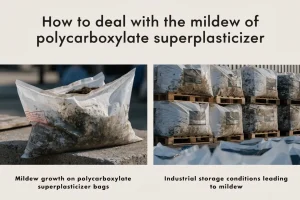
How to deal with the mildew of polycarboxylate superplasticizer
Blog How to deal with the
Product information, specifications & applications — sent directly to your email.
*Your information is kept confidential and will only be used to contact you regarding our products.