Blog
In hot, low-humidity conditions, the water required for cement hydration is prone to excessive evaporation, which can hinder the development of concrete strength and even cause shrinkage cracking. If concrete lacks effective protection, harmful media will penetrate its interior through its pores and cracks, causing steel corrosion and seriously reducing the durability of concrete structures, resulting in huge economic losses and resource waste. Therefore, the curing and protective effects of concrete are crucial to the durability performance of its structure.
At present, commonly used methods such as watering maintenance, film covering maintenance, and landfill maintenance are not only cumbersome to operate, but also cause huge waste of water resources or materials. In addition, although the use of curing agents is simple and fast, it can decrease adhesion between the concrete surface and the later protective or decorative layer, posing potential safety hazards.
Based on a summary of the classification and mechanism of existing concrete curing agents and protective agents, this article proposes a technical concept that integrates curing, protection, and decoration functions. Combined with the research results of the research group, a multifunctional imitation clear water concrete curing and protective agent is prepared, and its feasibility and practical application effects are discussed. The development prospects are also discussed.
American scientists in the 1940s proposed the concept of a concrete curing agent. Its core is to spray a layer of film-forming substance on the surface of newly poured concrete to achieve curing by reducing water evaporation. In 1958, the American Society for Testing and Materials (ASTM) developed the technical standard ASTMC309-2019 “Standard Specification for Liquid Film Forming Compounds Used for Curing Concrete” for concrete curing films; Subsequently, Japan and the United Kingdom also developed various maintenance agent products.
At present, maintenance agents are mainly divided into three categories: inorganic, organic, and organic-inorganic composite.
In terms of research on inorganic curing agents, studies have shown that active substances such as sodium methylsilicate, urea, and potassium dichromate are added to water glass to prepare curing agents. The results show that the compressive strength ratio of concrete at 28 days is 1.03, and the water retention rate is 37.5%. Through SEM and XRD analysis, it was found that the surface density and hydration product generation of the specimens sprayed with this curing agent were better than those of the blank group concrete treated with standard curing. Overall, inorganic curing agents have strong permeability and have a certain filling and repairing effect on concrete pores and cracks. However, they generally have problems such as low water retention rate, susceptibility to temperature influence, and poor durability (easy to fall off or dissolve).
In research on organic protective agents, studies show that introducing a fluorosilicone monomer into the polymer lotion improves its hydrophobic effect and reduces its surface tension. The results show that the curing agent can reduce the water evaporation of concrete by 80%, and the 28d compressive strength ratio is 95%.
To compensate for the shortcomings of a single type of curing agent, researchers have begun to explore organic-inorganic composite system curing agents to jointly leverage their advantages. For example, the polymer lotion forms a continuous, water-blocking film on the substrate surface. At the same time, the non-organic component penetrates the concrete to form crystals, fill pores, and repair the concrete.
Overall, the research on concrete curing agents is developing towards high efficiency, environmental protection, and economy. The successful application of new curing agents not only improves the performance of concrete, but also helps reduce resource consumption and environmental pollution, demonstrating good social and economic benefits. Future research will continue to focus on improving material properties, developing multifunctional curing agents, and exploring more environmentally friendly and sustainable curing technologies.
China’s concrete protective agents have developed earlier and come in various types. According to their chemical composition, they can be divided into three categories: inorganic protective agents, organic protective agents, and organic-inorganic composite protective agents. Inorganic protective agents mainly include sodium silicate solution, potassium silicate salt, and lithium silicate salt. Common types of organic protective agents include polyurethane, polyurea, acrylic acid, and organosilicon.
Inorganic protective agents can form crystals with certain strength and insolubility in concrete pores and cracks, playing a role in filling and repairing and exhibiting “self-healing” performance.
Organic waterproofing agents protect the surface of concrete by forming a continuous and dense coating, and are insensitive to temperature and humidity changes. However, they are prone to aging, cracking, and detachment, and have a relatively short service life. The organic silicon waterproofing agent directly reacts with the substrate to form a hydrophobic layer, avoiding the defects of the film-forming material itself.
Although adding an organic silicon waterproofing agent can improve the overall waterproofing of concrete, it can also slow the hydration rate of cement in concrete, significantly reducing its mechanical properties. Applying silicone waterproofing agent to the surface of concrete can increase its durability without compromising its mechanical properties.
Regarding the difference between internal mixing and external coating, experimental results have shown that adding an organic silicon waterproofing agent can slow the cement hydration rate in concrete, especially weakening the strength of the transition zone.
The hydrophobic layer generated by the organic silicon waterproofing agent has the characteristics of a large contact angle and a small rolling angle, and pollutants on the substrate surface are easily carried away by the liquid rolling off the coating. Based on this, researchers have developed superhydrophobic self-cleaning coatings to address the issues of poor durability and surface pollution in buildings. The results show that after using the coating, the contact angle of the building exterior wall is greater than 160° and the rolling angle is less than 1.5°, achieving a self-cleaning effect.
In the research of organic-inorganic composite protective agents, many scholars have prepared high-performance composite protective agents by using organic matter as the matrix and inorganic matter as the reinforcement, significantly improving the durability of concrete structures.
In summary, inorganic protective agents strengthen the internal structure of concrete through crystallization, while organic protective agents reduce external erosion by forming a protective layer. Organic-inorganic composite protective agents combine the advantages of both, providing comprehensive protection. Current research on concrete protective agents is shifting toward more efficient, environmentally friendly, economical, and multifunctional solutions to meet the growing demand for concrete durability in the construction industry.
The core mechanism for maintaining and protecting inorganic materials is the formation of water-insoluble crystals (mainly CaCO3), which fill and repair the pores and cracks in concrete. These crystals are generated by the reaction of active molecules with Ca(OH)2, free Ca2+, and oxides in concrete, effectively improving the structural density and blocking the initial evaporation of water and the later infiltration of corrosive media.
At present, it is believed that inorganic materials mainly function in two ways: one is through infiltration crystallization. Under the action of a concentration gradient and pressure, the active ingredients coated on the surface of the substrate infiltrate into the interior of the concrete with water, react with Ca and oxides to generate crystals to fill pores and cracks, and block water channels.
When the concrete cracks again, the active substance can migrate with the newly introduced moisture to the crack and continue to react until the crack is closed, achieving continuous curing and protection. The second is complexation precipitation, where the active ingredient first forms a soluble complex with Ca2+. The complex migrates with water in the pores of concrete. When it encounters aluminate or silicate ions, it precipitates to form a crystalline product with certain strength and insolubility in water, filling the pore cracks.
Organic film-forming materials form a continuous and dense thin film on the surface of concrete, blocking the initial loss of moisture and the later infiltration of harmful media, achieving the purpose of curing and protection. The dispersed phase and dispersed medium of organic film-forming materials are latex particles and water, respectively. At a certain temperature, the water evaporates rapidly, causing the latex particles to approach, accumulate, deform, and ultimately fuse into a transparent film, improving the durability of concrete.
Organic silicon materials mainly form hydrophobic layers on the surface and capillary walls of concrete through chemical reactions with concrete hydration products.
In summary, inorganic materials form crystals through reaction to fill the internal defects of concrete. In contrast, organic materials form a thin film or hydrophobic layer on the surface to block medium transmission. Both can effectively achieve curing and protection. Therefore, the developed organic, inorganic, and organic-inorganic composite curing and protective agents have significant effects. However, in traditional methods, various materials often function independently, with cumbersome steps and difficulty coordinating and achieving unified effects, which can easily lead to resource waste.
Existing research mostly focuses on a single function (maintenance or protection), and rarely explores the feasibility of materials playing dual roles simultaneously. Through in-depth analysis of the mechanism, it can be concluded that integrating maintenance and protection functions is theoretically feasible. This integrated technology not only simplifies the construction process but also significantly saves human and material resources, making it a key direction for future development.
At present, the curing, protection, and apparent quality control of plain concrete are independent process links, and their technical requirements and construction difficulties far exceed those of ordinary concrete. If the maintenance and protection effect is poor, the plain concrete exposed to the atmosphere for a long time is highly susceptible to corrosion by water vapor, carbon dioxide, and ultraviolet rays, leading to yellowing, dull color, pollution flow marks, and other problems.
This not only damages its apparent quality, but also seriously reduces the durability and service life of the concrete. To improve the curing and protection effect and apparent quality of plain concrete, construction units have tried various methods, but often with little effect and high cost. Therefore, developing a multifunctional coating that simultaneously has maintenance, protection, and decorative functions has important practical significance.
Existing technological practices mainly focus on the following three aspects: first, curing. In plain concrete engineering, membrane curing and watering curing are often used. The second is protection, often using protective agents such as acrylic acid, polyurethane, organosilicon, water-based fluorocarbon resin, etc. Thirdly, in terms of improving the apparent quality, research has been conducted on the influence of material parameters such as cement varieties, fly ash, aggregates, and additives (such as initial air content, maximum particle size of coarse aggregates, plastic viscosity, initial yield stress, and bleeding rate) on the apparent porosity of fair faced concrete, emphasizing that material parameters are important factors affecting the apparent quality of fair faced concrete.
In response to the problems existing in plain concrete, our research group has developed a simulated plain concrete curing and protective agent that integrates curing, protection, and decoration. This product is based on a self-made self-emulsifying film-forming lotion, compounded with fillers and additives, which can effectively fill concrete pores and cracks and cover stains. In addition, by adding different pigments, rich artistic effects can also be constructed.
At present, we still lack performance evaluation, application effect evaluation, and relevant technical standards or regulations for the curing and protective agent products of imitation fair water concrete. To establish a sound application system, it is recommended to start preparing relevant standards as soon as possible.
This article systematically reviews the research progress of organic, inorganic, and organic-inorganic composite concrete curing and protective agents, deeply explores their mechanisms of action, analyzes their performance characteristics, and clarifies the advantages and limitations of various products. Based on this, a technical route that integrates maintenance, protection, and decoration functions is proposed to address the challenges faced by fair-faced concrete in practical engineering.
A simulated fair-faced concrete maintenance and protection agent is prepared, which conforms to the development trend of multifunctionality and greenness. It can effectively improve construction efficiency, reduce comprehensive costs, and significantly enhance the durability of concrete.
Future research should integrate nanotechnology, biotechnology, and intelligent monitoring technology to further optimize material properties and achieve the integration of damage monitoring, self-healing, and predictive maintenance of water-like protective coatings.
With the widespread application of fair-faced concrete in bridge, municipal, road, and subway engineering, the use of imitation fair-faced concrete curing and protective agents is expected to create huge social, economic, and environmental benefits in energy conservation, emission reduction, and pollution reduction, with broad application prospects.
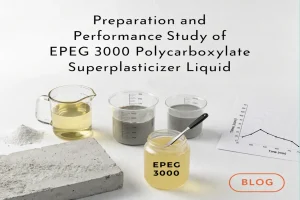
Preparation and Performance Study of EPEG 3000 Polycarboxylate Superplasticizer Liquid
Blog Preparation and Perf
Product information, specifications & applications — sent directly to your email.
*Your information is kept confidential and will only be used to contact you regarding our products.