Blog
As the core admixture product for modern high-performance concrete, polycarboxylate superplasticizers have completely replaced traditional naphthalene-based and melamine-based water reducers by virtue of multiple advantages including low dosage, high water reduction, adjustable performance, environmental friendliness and excellent durability. At present, they are widely used in high-end engineering fields such as high-speed railway bridges, prefabricated buildings, water conservancy dams, ultra-high-strength concrete and municipal infrastructure, serving as the key material for modern concrete projects to achieve high strength, high fluidity and high durability.
Most industry practitioners are familiar with the application advantages of polycarboxylate superplasticizers but unclear about the essential source of their performance. In fact, all excellent properties of polycarboxylate superplasticizers rely entirely onpolyether macromonomers. As an indispensable core functional base material, polyether monomers are the prerequisite for synthesizing practical and high-performance polycarboxylate superplasticizers.

From the perspective of polymer synthesis principle, polycarboxylate superplasticizers are typical comb-shaped polymers composed of two major structures: main chain and side chain, which work together to determine the overall performance of superplasticizers. The main chain is polymerized from small molecular carboxylic monomers such as acrylic acid and methacrylic acid, which mainly provides carboxyl adsorption groups to realize the fixed adsorption of superplasticizers on cement particles and only serves as a basic skeleton without functional effects.
In contrast, the functional side chains that determine the water reduction rate, slump retention, working condition adaptability and anti-interference performance of superplasticizers are completely polymerized from polyether macromonomers. Simply put, small molecular carboxylic acids build the basic skeleton of superplasticizers, while polyether monomers provide all core functions. The type, molecular weight, purity and activity of polyether monomers directly determine the performance grade and stability of finished polycarboxylate superplasticizers, which is the fundamental reason for the irreplaceability of polyether monomers.
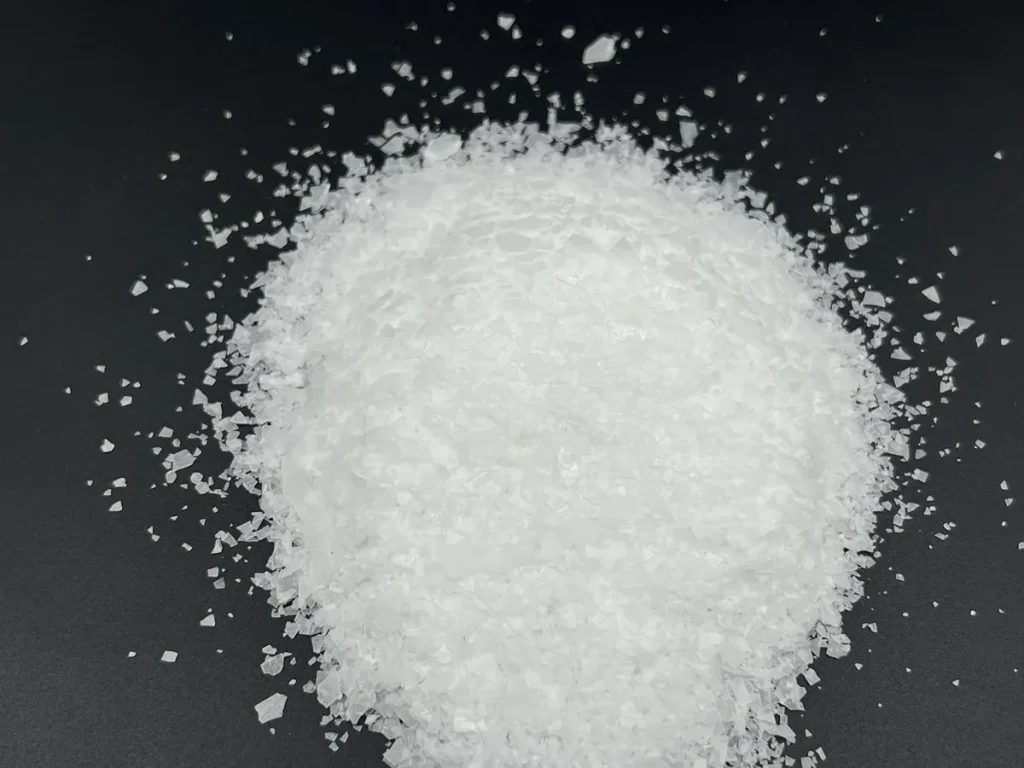
Polyether monomers endow polycarboxylate superplasticizers with steric hindrance dispersion performance that far exceeds traditional water reducers, forming the core technical barrier that outperforms traditional admixtures. Traditional naphthalene-based water reducers disperse cement particles only through single electrostatic adsorption, featuring weak adsorption force and poor stability. They are extremely susceptible to cement composition, sand and stone mud content and ambient temperature, resulting in rapid slump loss and limited application scenarios, which cannot meet the construction requirements of high-performance concrete.
Polyether monomers are equipped with long-chain polyoxyethylene hydrophilic side chains. After polymerization, they form a multi-layer three-dimensional steric hindrance structure and dense hydration film on the surface of cement particles. The main chain of superplasticizers is firmly adsorbed on cement particles through electrostatic force, while the long polyether side chains fully stretch outward. When cement particles tend to agglomerate, steric hindrance generates continuous repulsion force to offset the molecular flocculation attraction between particles and completely disperse agglomerated cement particles.
This process effectively releases free water wrapped by cement particles, significantly improves concrete fluidity without increasing mixing water dosage and realizes efficient water reduction. Compared with electrostatic adsorption, the steric hindrance structure constructed by polyether monomers features strong stability and low environmental interference, which can continuously maintain the workability of concrete slurry and constitute the core source of high slump retention and wide adaptability of polycarboxylate superplasticizers.
The biggest advantage of polycarboxylate superplasticizers lies in flexible and adjustable performance for customized functional products suitable for different construction scenarios, which completely depends on the differences in polyether monomer types. The three mainstream polyether monomers in the industry, namely HPEG, TPEG and EPEG, have distinct molecular activity, side chain structure and functional advantages to accurately match diverse working conditions.
HPEG monomers feature high activity and fast water reduction without obvious retarding effect, focusing on early strength and rapid mold release for precast components and low-temperature construction.
TPEG monomers deliver excellent slump retention and ultra-low slump loss, suitable for long-distance transportation and mass concrete pouring.
EPEG monomers possess stronger anti-mud and anti-low-temperature interference capabilities, adapting to complex and harsh working conditions with high mud content aggregates. By selecting different polyether monomers and matching different molecular weight specifications, full-range polycarboxylate superplasticizers including early-strength, slump-retaining, anti-mud and slow-release types can be synthesized.
In addition to the core water reduction and dispersion function, polyether monomers can accurately regulate the concrete hydration process and balance construction performance and mechanical properties. The long hydrophilic side chains of polyether monomers have excellent water locking capacity, which slowly release water during concrete mixing, standing and pouring to continuously maintain slurry fluidity, greatly reduce slump loss and solve the problems of dryness, segregation and layering of standing concrete.
Meanwhile, high-purity polyether monomers contain no harmful impurities and will not inhibit the normal hydration of cement. On the contrary, they optimize the dispersion uniformity of cement particles, enable full contact between cement minerals and water, improve the integrity of hydration reactions, reduce internal pores and defects of concrete, enhance slurry compactness, and fundamentally strengthen the compressive strength, impermeability and frost resistance of concrete, so as to greatly improve the durability of engineering structures.
Reviewing the technical iteration process of the polycarboxylate superplasticizer industry, every performance upgrade and working condition adaptability improvement of finished products essentially stems from the technical optimization of polyether monomers.
The first-generation ordinary polycarboxylate superplasticizers adopt low-performance traditional polyether monomers with single performance, poor adaptability and severe slump loss.
The second-generation modified superplasticizers use standardized HPEG and TPEG monomers to balance water reduction and slump retention performance.
The third-generation high-end superplasticizers adopt modified EPEG monomers to solve the adaptation problems of high-mud, low-temperature and high-strength concrete.
At present, the R&D and production optimization of all high-performance polycarboxylate superplasticizers focus on molecular structure modification, precise molecular weight regulation and purity improvement of polyether monomers. The quality of polyether monomers directly determines the stability, adaptability and performance ceiling of superplasticizer finished products, serving as the irreplaceable performance cornerstone of polycarboxylate superplasticizers.
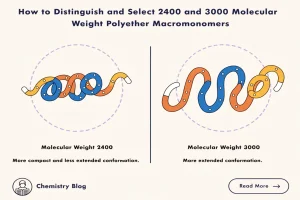
How to Distinguish and Select 2400 and 3000 Molecular Weight Polyether Macromonomers?
Blog How to Distinguish a
Product information, specifications & applications — sent directly to your email.
*Your information is kept confidential and will only be used to contact you regarding our products.