Blog
How to Distinguish and Select 2400 and 3000 Molecular Weight Polyether Macromonomers?
Blog How to Distinguish a
Blog
In the industrial production of fabricated precast concrete components, mold turnover efficiency, curing cycle and early strength development are the three core indicators that determine production line capacity and production cost. Precast concrete mixed with traditional naphthalene-based water reducers and ordinary polycarboxylate water reducers commonly suffers from delayed early hydration, poor slurry compactness and long static curing cycles.
Under conventional processes, precast components require 12 to 24 hours of curing to meet mold release standards, resulting in long mold occupation, low site utilization and severely restricted mass production capacity.
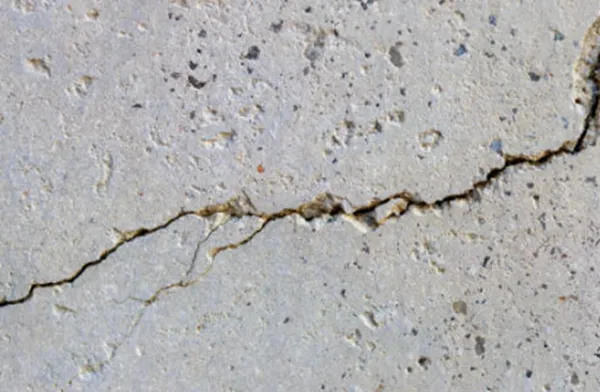
Insufficient early strength also causes a series of quality defects, such as surface pitting, micro cracks and substandard overall strength of components after demolding, which easily lead to damage and rework during hoisting and transportation and greatly increase enterprise production costs.
As a core macromonomer specially used for polycarboxylate superplasticizers in precast concrete, HPEG 2400 (Methallyl Polyoxyethylene Ether) thoroughly solves the industry pain points of slow mold release, low strength and limited production capacity by virtue of its unique molecular structure and excellent early-strength performance. It has become an essential functional raw material for the production of precast wall panels, pipe piles, box girders, fabricated floor slabs and other precast components.
HPEG-2400 is the mainstream and optimal specification of HPEG monomer widely adopted in the precast component industry for synthesizing early-strength polycarboxylate superplasticizers. Its molecular structure features high activity, high grafting rate and low retarding effect, which perfectly conforms to the rapid forming process requirements of precast concrete.
One end of the molecule is a high-activity methallyl unsaturated double bond with stable chemical properties. It can undergo stable free radical polymerization reaction with small molecular monomers such as acrylic acid to produce polycarboxylate superplasticizers with regular structure, uniform performance and stable batch consistency.
The other end of the molecule is a long-chain polyoxyethylene hydrophilic group, which can quickly form a dense steric hindrance adsorption layer on the surface of cement particles. It effectively breaks the agglomeration and flocculation structure of cement particles and releases free water wrapped by particles, realizing low dosage and high water reduction effect.
Compared with conventional slump-retaining TPEG monomers and old-style polyether monomers, HPEG-2400 possesses higher polymerization activity without redundant retarding components. It delivers stronger water reduction efficiency and does not inhibit the early hydration process of cement, perfectly matching the core demands of rapid mold release and early strength enhancement for precast components.
The core logic of rapid mold release for precast components is to improve concrete compactness, accelerate the generation of hydrated cementitious products and reach the critical mold release strength in a short time. Traditional concrete has a high water-binder ratio, abundant free water and dense capillary pores inside the slurry, leading to scattered and slow hydration reactions and insufficient early cementitious products that fail to form a dense structure quickly.
The early-strength polycarboxylate superplasticizer synthesized with HPEG monomer achieves a water reduction rate of over 25% at an ultra-low dosage, which greatly reduces the water-binder ratio of concrete, fundamentally cuts down internal pores and free water and improves the initial compactness of slurry.
Meanwhile, the hydrophilic functional groups of HPEG monomer form stable complexes with calcium ions in cement, which precisely catalyzes the early hydration reaction of core cement minerals such as tricalcium silicate and dicalcium silicate, accelerates the generation rate of cementitious substances including calcium silicate hydrate and calcium hydroxide, and enables rapid hardening and forming of concrete in a short period.
In actual production conditions, precast concrete adopting the HPEG-2400 formula can reach the standard mold release strength after only about 8 hours of curing at normal temperature, nearly cutting the curing cycle in half compared with traditional formulas. The mold release efficiency is further improved under steam curing conditions, which significantly boosts mold turnover efficiency and increases the daily production capacity of a single production line by more than 30%. It completely solves the industry problems of high mold investment, slow turnover and low capacity in precast production.
HPEG 2400 optimizes both early and later strength of concrete to realize steady strength growth without strength reduction risk. In terms of early strength, the dual effects of high water reduction and hydration catalysis enable the 1-day compressive strength of precast concrete to reach more than 180% of the reference strength, and the 3-day strength to 170%, fully meeting the strength standards for component mold release, hoisting and transportation and avoiding component damage caused by insufficient strength.
In terms of later strength, the hydration system optimized by HPEG monomer maintains stable operation. The internal capillary pores of concrete are continuously filled with hydration products to form a denser structure, and the 28-day standard compressive strength is increased by more than 15%.
Meanwhile, it effectively reduces drying shrinkage and temperature shrinkage deformation of concrete, and greatly decreases quality hazards such as cracking and warping of precast components. Unlike ordinary early-strength agents that only accelerate surface hydration and easily cause later strength attenuation, HPEG monomer optimizes the entire hydration process from the micro level to ensure the long-term structural stability and durability of components.
Large-scale centralized production of precast components puts forward high requirements for concrete workability, stability and environmental performance. HPEG-based polycarboxylate superplasticizers feature high water reduction, low slump loss, low air entrainment and no harmful impurities. The mixed concrete presents excellent fluidity without bleeding, segregation or layering, which can fully fill the corners of molds and produce precast components with flat and dense surfaces free of pores and pitting, meeting the production standards of high-grade fair-faced precast components.
In addition, HPEG 2400 contains no chloride ions, sulfate corrosive components and alkali-aggregate reaction risks, which is environmentally friendly and compliant with the green production specifications of the prefabricated construction industry. By fine-tuning the ratio of HPEG monomer and functional small monomers, it can flexibly adapt to normal temperature curing, low-temperature construction, steam curing and other working conditions, balancing production efficiency, component strength and product durability. It is currently the most cost-effective and widely applied polyether macromonomer in the precast concrete industry.
How to Distinguish and Select 2400 and 3000 Molecular Weight Polyether Macromonomers?
Blog How to Distinguish a
Product information, specifications & applications — sent directly to your email.
*Your information is kept confidential and will only be used to contact you regarding our products.